2026 Guided Inner Child Healing Workbook
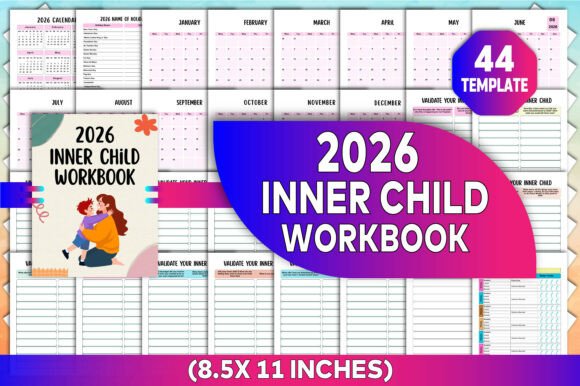
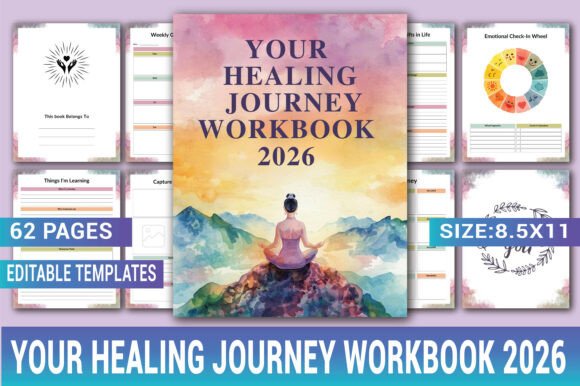
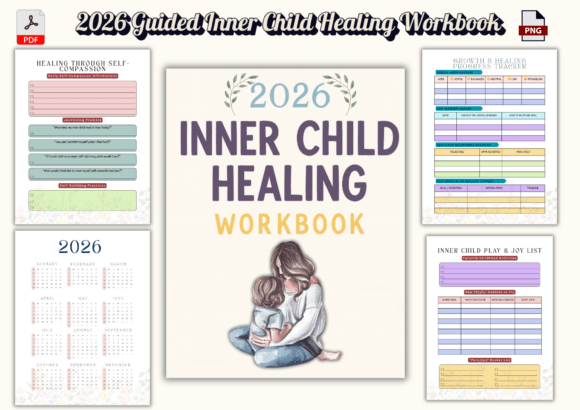
The 2026 Guided Inner Child Healing Workbook is a 14-page digital resource designed to support emotional healing through structured self-reflection and compassionate inner work. Sized at 8.5 x 11 inches (US Letter), it is delivered as high-resolution PDF and PNG files—intended for personal printing or on-screen use. Its content centers on reconnecting with early emotional experiences, fostering self-compassion, and strengthening internal safety—not as a clinical treatment, but as a supportive tool for ongoing growth.
This workbook includes guided prompts for inner child assessment, space for writing healing letters (to and from your younger self), journaling pages focused on self-compassion, a trigger-soothing strategies tracker, and sections dedicated to exploring play, comfort, and joy. A progress tracker and soft pastel visual design aim to reinforce calm and accessibility. It does not include audio guidance, video instruction, or live facilitation—its structure relies on written reflection and personal pacing.
Who Might Consider This Workbook?
Individuals often explore resources like the 2026 Guided Inner Child Healing Workbook when they recognize recurring emotional patterns—such as heightened reactivity to criticism, difficulty setting boundaries, or chronic self-criticism—that feel rooted in earlier life experiences. It may appeal to people who are already engaged in therapy and want supplemental exercises, those maintaining progress between sessions, or individuals building foundational self-awareness outside formal care.
It’s also relevant for readers prioritizing gentle, low-pressure entry points into emotional work—especially if they prefer tangible, page-based structure over app-based tools or time-bound programs. Because it requires no subscription or external platform, it suits users valuing privacy, autonomy over pace, and minimal digital friction.
Potential Benefits and Realistic Expectations
When used consistently, the workbook can help clarify how childhood experiences inform present-day responses. The inner child assessment prompts, for example, invite reflection without demanding immediate resolution—supporting gradual insight rather than forced breakthroughs. Healing letters offer a low-stakes way to practice empathy toward one’s younger self, which research links to improved self-compassion over time. The trigger-soothing tracker encourages pattern recognition and intentional response—not just reaction—which aligns with evidence-informed emotional regulation practices.
However, it is important to note that this is not a substitute for trauma-informed therapy, psychiatric care, or crisis support. The workbook does not diagnose, treat, or process complex trauma independently. Users experiencing active distress, dissociation, or overwhelming emotions during exercises may need professional guidance before continuing. Progress is rarely linear, and meaningful shifts often require repetition, patience, and integration beyond the pages—something the workbook acknowledges implicitly through its emphasis on “gentle” and “ongoing” practice.
Situations Where It May Be a Strong Fit
The 2026 Guided Inner Child Healing Workbook tends to serve well when:
- You’re already working with a therapist and seek structured, printable exercises to extend session themes into daily life;
- You respond well to journaling and reflective writing as primary learning modalities;
- You value simplicity—no login, no notifications, no required tech setup;
- Your goals center on building consistent self-compassion habits, identifying emotional triggers, or reclaiming small moments of safety and play;
- You prefer resources with calming aesthetics and clear, non-clinical language that avoids jargon or prescriptive tone.
In these contexts, the workbook functions less as a standalone solution and more as a scaffold—offering prompts and frameworks that honor individual pace while encouraging continuity in healing work.
When Alternatives May Warrant Consideration
This workbook may be less suited for individuals seeking real-time feedback, interactive coaching, or adaptive content based on responses. If you benefit significantly from voice-guided meditations, somatic practices, or accountability structures (e.g., weekly check-ins), other formats—such as guided audio programs, telehealth-supported journaling apps, or group-based inner child workshops—could provide complementary support.
Similarly, those navigating recent or severe trauma, attachment injuries requiring relational repair, or co-occurring mental health conditions (e.g., PTSD, depression, anxiety disorders) will likely need more intensive, relationship-based intervention. In such cases, the workbook might still hold value—as a supplementary tool—but only alongside qualified clinical support.
Also consider practical factors: because it’s a static PDF/PNG file, it doesn’t auto-save progress or offer search functionality. Users who rely heavily on digital annotation tools or screen readers should verify compatibility with their preferred platforms before purchase.
Making an Informed Decision
Before choosing the 2026 Guided Inner Child Healing Workbook, reflect on two questions: What do I hope to understand or shift in my relationship with myself? and What kind of support helps me stay engaged with emotional work over time?
If your answer emphasizes reflection, writing, and gentle consistency—and you’re comfortable guiding your own process with thoughtful prompts—the workbook aligns well. If you find unstructured journaling difficult, struggle with motivation without external structure, or need help interpreting emotional reactions as they arise, pairing it with another modality (e.g., a trained therapist, a peer support group, or a guided course) may increase its usefulness.
It’s also helpful to review sample pages if available. Look for clarity in instructions, room for open-ended response (not just fill-in-the-blank), and whether the tone feels respectful of complexity—not overly simplistic or prescriptive. Healing isn’t about fixing a “broken” inner child; it’s about developing presence, curiosity, and kindness toward parts of yourself shaped by earlier environments. Resources that honor that nuance tend to sustain engagement longer.
Ultimately, the 2026 Guided Inner Child Healing Workbook offers a focused, accessible entry point—not a destination. Its value emerges not from completion, but from how meaningfully it supports your capacity to notice, name, and gently accompany your own experience.