2026 Recipe Book Journal
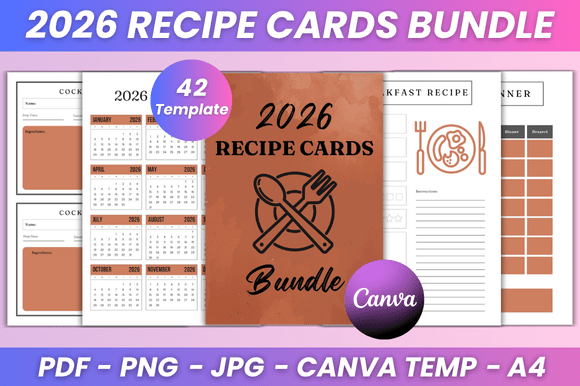
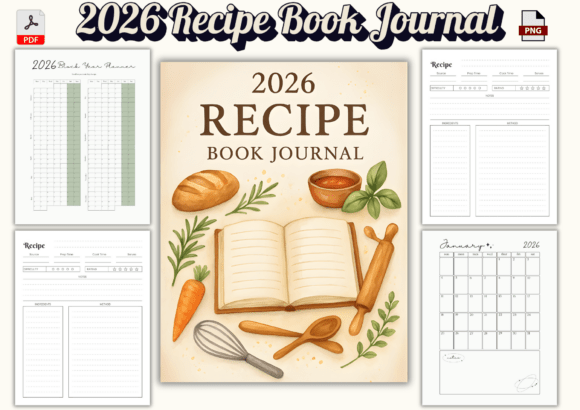
Imagine opening a journal where every page invites you to cook—not just follow instructions, but reflect, adapt, and remember. The 2026 Recipe Book Journal isn’t another generic notebook. It’s a 129-page, 8.5×11-inch culinary companion designed for people who treat cooking as both practice and memory: meal preppers logging weekly dinners, home bakers refining sourdough starters, grandparents preserving handwritten family dishes, or food bloggers drafting original content before publishing.
Its size matters—literally. At 8.5×11 inches with no bleed, it prints cleanly on standard home printers or KDP without trimming errors or lost margins. That means your carefully written notes, flour-dusted ingredient lists, or hand-drawn plating sketches stay fully visible. No guessing whether the “chef’s tips” section got cut off. No frustration reformatting digital entries for print. You get consistency across formats: use the PDF for tablet annotation, the PNG for quick reference in your kitchen app, or print single pages as needed.
The layout supports real workflow—not just aesthetics. Each recipe spread dedicates clear space for ingredients (with checkboxes), step-by-step instructions (lined, but not cramped), and a dedicated “Notes & Chef’s Tips” area below. That last section is where value deepens: it’s not just for corrections (“add more salt next time”), but for context—like noting that your grandmother stirred counter-clockwise, or that the dish tasted best after resting overnight. Those details rarely survive in digital apps or scattered notes. Here, they’re anchored to the recipe itself.
Meal planning feels less like chore and more like curation. Weekly planner pages include slots for breakfast, lunch, dinner, and snacks—but also a “Why This Week?” line. That small prompt encourages intentionality: Are you using up seasonal produce? Testing recipes before a holiday gathering? Simplifying after a busy work stretch? It turns planning into reflection, helping users align meals with actual life rhythms—not just empty calendars.
Kitchen inventory pages go beyond listing pantry staples. They’re organized by category (dry goods, oils, spices, refrigerated items) with space to note purchase dates and expiration windows. For someone managing dietary restrictions or batch-cooking for a growing family, this prevents duplicate buys and reduces food waste. One educator we spoke with uses hers to track classroom cooking supplies—keeping tabs on gluten-free flours and nut-free alternatives across semesters.
Seasonal prompts and holiday sections aren’t decorative—they’re functional scaffolding. Instead of staring at a blank page wondering what to make for Thanksgiving, the journal offers gentle inspiration: “Roast vegetable variations,” “Make-ahead sides,” or “Kid-friendly garnish ideas.” These aren’t recipes—they’re creative nudges calibrated to real constraints: time, equipment, ingredient access. A freelancer testing recipes for a new e-book used the “Spring Produce Pairings” prompt to build three new dishes in under an hour—then documented taste tests, substitutions, and serving notes directly on the same spread.
The included measurement conversion chart is printed on durable, lightly textured paper—designed to withstand kitchen splashes and frequent flipping. It covers metric, imperial, volume-to-weight (for flour, sugar, butter), and even common baking ratios (e.g., 5:3:2 for bread). No more tabbing between browser windows mid-recipe—especially helpful when scaling batches for meal prep or adjusting for high-altitude baking.
Shopping list pages are double-columned and dated, with checkboxes and room for store-specific notes (“Whole Foods: check bulk bin oats”). Unlike apps that auto-delete items, this format preserves your history—helping you spot patterns. Do you buy coconut milk every week? Maybe it’s time to stock a shelf-stable version. Are frozen herbs always on the list? Perhaps a windowsill herb garden makes sense. The physical act of checking and crossing builds awareness that digital lists often obscure.
The “Favorite Recipes Index” isn’t alphabetical by default—it’s blank, so you fill it your way: by occasion (“Birthday Cakes”), dietary need (“Dairy-Free Dinners”), or even emotional resonance (“Rainy Day Comfort”). That flexibility reflects how people actually recall food—not by title, but by feeling, function, or season. A small business owner building a catering menu uses hers to tag recipes by prep time (<30 min), guest count (serves 12+), and equipment needed (no stand mixer required).
Yes, it’s a printable PDF and PNG—but its utility extends beyond paper. Many users load the PDF into note-taking apps like GoodNotes or Notability, adding voice memos to recipe pages or sketching plating ideas with a stylus. The no-bleed design ensures those annotations stay within safe margins. Others print only the pages they need: a full spread for a holiday recipe, a single shopping list, or the kitchen inventory sheet before a pantry reset.
It’s not for everyone—and that’s intentional. If you prefer minimalist, undated journals or rely exclusively on cloud-synced databases with AI-powered substitutions, this may feel too structured. Likewise, if your workflow centers on rapid-fire social media content creation with constant visual iteration, the watercolor cover and thoughtful spacing prioritize clarity over speed. But for those who value continuity—between seasons, generations, or versions of a recipe—the 2026 Recipe Book Journal creates stability without rigidity.
Think of it as infrastructure, not decoration. Just as a well-organized filing system doesn’t guarantee great writing—but makes revision possible—the right journal doesn’t cook for you. It holds space for your process: the failed soufflés, the accidental masterpieces, the notes scribbled in haste before a pot boils over. Over time, those pages become more than instructions. They become evidence of attention. Of care. Of what it means to feed yourself—and others—well.
Whether you’re documenting your first homemade pasta or compiling decades of family meals into a legacy book, the 2026 Recipe Book Journal meets you where you are: practical enough for daily use, spacious enough for growth, and quietly beautiful enough to leave on your counter—not tucked away in a drawer.