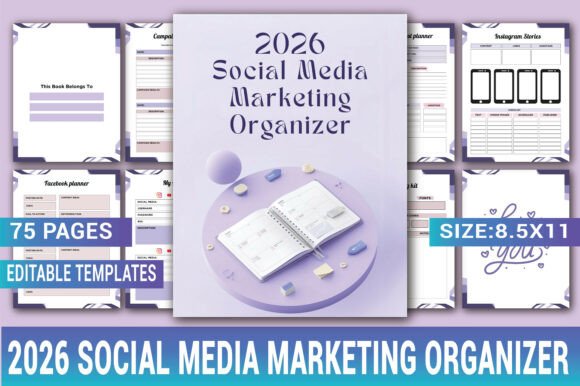
2026 Social Media Marketing Organizer
If you’ve ever stared at a blank content calendar in December, scrambled to remember which platform needs a Reel versus a carousel, or lost track of how much you spent on last month’s Instagram ads—this is for you. The 2026 Social Media Marketing Organizer isn’t just another printable planner. It’s a thoughtfully built, year-long system that helps creators, solopreneurs, educators, and small business owners stay grounded, intentional, and proactive—not reactive—in their digital work.
What It Actually Does (Without the Buzzwords)
Think of it as your strategy companion—printed or digital—that walks with you through every part of your social media workflow. It starts with a full 2026 calendar, but goes far beyond dates. Each month includes space to map out themes, campaigns, product launches, holidays, and even personal energy levels—so your planning feels human, not robotic.
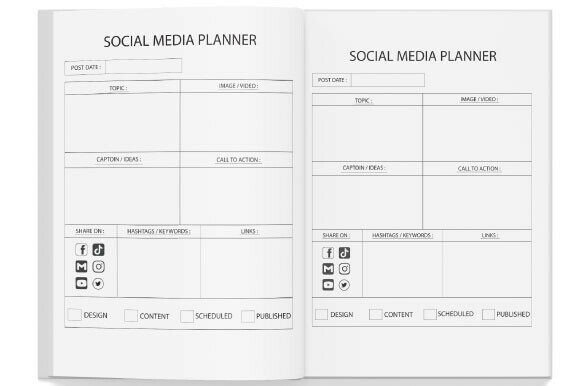
You’ll find dedicated sections for each major platform: Instagram, Facebook, YouTube, Pinterest, and LinkedIn. That means no more juggling five different spreadsheets. In the Instagram planner, you can note caption drafts, hashtag sets, and even whether a post needs a carousel or video thumbnail. In the YouTube section, there’s room for video titles, descriptions, CTA notes, and thumbnail ideas—all aligned with your upload schedule.
Where It Fits Into Real Life
A freelance graphic designer might use the branding pages to lock in her color palette, font pairings, and voice guidelines before launching a new website—and then reference those same pages when designing social posts. A yoga instructor building an online course could use the goals & strategy section to break down “launch 100-person cohort by March” into monthly milestones: build email list → film trailer → run a giveaway → open enrollment.
Even educators and nonprofit coordinators benefit. One high school art teacher used the organizer to plan a year-long student-led Instagram account—posting student artwork, behind-the-scenes studio time, and local event coverage. She scheduled posts during planning periods, tracked engagement to see which projects resonated most, and used the analytics pages to show administrators how the account supported community outreach goals.
More Than Just Scheduling—It Connects the Dots
The real value isn’t just in *what* you post—but how it serves your larger goals. The 2026 Social Media Marketing Organizer bridges the gap between daily tasks and long-term vision. Its business strategy section helps you define quarterly objectives, outline marketing experiments (“Try Pinterest SEO for 3 months”), and assign realistic action steps—even if you only have 45 minutes a week to work on them.
The campaign tracking pages are especially helpful if you’re testing paid ads. Instead of guessing whether that $120 Facebook boost drove sales, you log budget, audience, creative, conversion goal, and actual revenue right next to it. Over time, patterns emerge: “Video testimonials convert 3x better than static images for my service,” or “LinkedIn ads perform best when paired with a downloadable checklist.”
Practical, Not Perfect
This organizer doesn’t assume you’ll post every day—or that you need to be everywhere at once. It supports selective, sustainable effort. If you only manage one platform consistently, you can focus entirely on that planner and ignore the rest. If you’re launching a new offer in Q2, the product planning pages help you outline pricing, compare competitor offers, and estimate launch expenses—without opening a new spreadsheet.
The finance section is intentionally simple: income tracking, expense logging, and a basic pricing calculator—not accounting software, but enough to spot trends. Did your June revenue dip because you skipped two weeks of posting? Or because a key client paused their retainer? Having those numbers side-by-side with your content calendar makes cause-and-effect clearer.
Things to Keep in Mind Before You Begin
First—this works best when you treat it like a living tool, not a test you have to pass. You don’t need to fill every box on January 1st. Start with one section that feels most urgent: maybe your Q1 content calendar, or your brand voice guide. Build momentum gradually.
Second, consider how you’ll use it. It’s designed for both print and digital use (PDF with clickable tabs and editable fields), so choose what fits your rhythm. Some users print monthly spreads and keep them in a binder; others prefer typing directly into the PDF on a tablet with a stylus.
Third, it’s not a replacement for intuition—but it does make intuition more reliable. When you track what works over time, your gut feeling becomes more informed. You’ll notice which types of captions get saved, which visuals drive profile visits, and which days of the week your audience engages most—even without third-party analytics tools.
Who Benefits Most?
- Beginners who want structure without overwhelm—no prior marketing experience needed.
- Creatives launching a shop, podcast, or portfolio site and needing to align content with brand identity.
- Small business owners wearing multiple hats and needing one place to connect social activity to sales and service delivery.
- Educators and coaches building authority online while balancing teaching, curriculum prep, or client work.
- Freelancers who want to showcase expertise, attract ideal clients, and measure ROI on time invested in social media.
At its core, the 2026 Social Media Marketing Organizer answers a quiet but common question: “How do I stay consistent without burning out?” It doesn’t promise viral growth or overnight success. Instead, it offers clarity, continuity, and confidence—one thoughtful, organized step at a time.