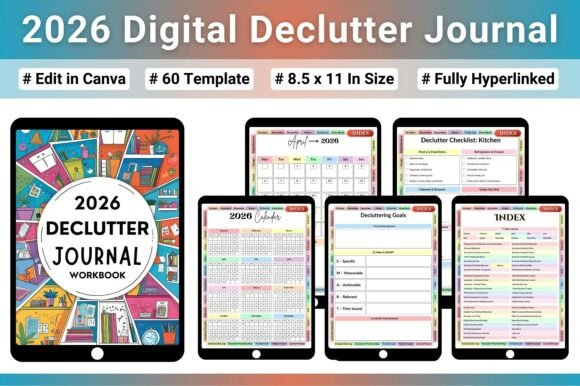
Digital 2026 Declutter Journal Workbook
Start 2026 with intention—not just resolution. The Digital 2026 Declutter Journal Workbook isn’t another static checklist or generic planner. It’s a thoughtfully engineered digital tool built for people who juggle multiple roles—freelancers managing client files and home life, educators streamlining lesson plans and classroom supplies, small business owners auditing cloud storage while reorganizing inventory, or creators curating digital assets across platforms.
This isn’t about minimalism as aesthetic. It’s about functional clarity: reducing cognitive load, reclaiming screen time, and aligning physical space with how you actually live and work. The Digital 2026 Declutter Journal Workbook supports that shift with structure that adapts—not dictates.
Why Hyperlinks Change How You Use a Digital Planner
Most digital planners are flat PDFs. You scroll, zoom, search (if your PDF reader allows it), and often lose your place. The Digital 2026 Declutter Journal Workbook flips that experience. Its hyperlinked index—placed right at the front—isn’t decorative. It’s functional infrastructure.
Click “Kitchen Declutter Checklist” and land instantly on page 47. Tap “March Tracker” and jump to your monthly progress sheet. Select “Digital Audit Log” and open the exact table where you log app subscriptions, cloud folders, or outdated backups. No hunting. No tabs. No mental overhead.
This matters most when your workflow is fragmented: reviewing a client proposal on your laptop, updating a declutter log on your iPad during lunch, checking off a closet challenge on your tablet before bed. The hyperlink navigation works consistently across devices—and it’s optimized for touch, keyboard shortcuts, and screen readers.
More Than a Calendar: Integrated Time + Task Design
The inclusion of a full 2026 Calendar section goes beyond dates. It’s woven into the decluttering logic. Each month features:
- A Year-at-a-Glance spread showing seasonal rhythms—ideal for planning deep-cleaning cycles around holidays or travel windows;
- Monthly Overview Pages with space to note personal commitments, project deadlines, and energy levels—so you schedule decluttering when it’s sustainable, not just convenient;
- Monthly Declutter Focus Sections, like “April: Digital Files & Email Archive” or “September: Back-to-School Supply Reset,” grounded in real-life timing;
- Calendar-linked planning sheets that auto-reference your chosen focus area—no manual cross-referencing needed.
For a marketing consultant cleaning up outdated campaign assets, this means assigning Q1 to audit Canva templates and Google Drive folders—then using March’s dedicated tracker to log deletions, archive decisions, and folder restructures. For a homeschooling parent, it means aligning June’s “Learning Materials Reset” with end-of-year curriculum reviews.
Room-by-Room That Actually Fits Real Homes
The Digital 2026 Declutter Journal Workbook avoids one-size-fits-all room lists. Its checklists reflect lived-in complexity:
- Bedroom includes not just clothing but nightstand tech (charging cables, old earbuds), under-bed storage categories, and seasonal rotation prompts;
- Kitchen covers pantry expiration tracking, appliance cord management, and recipe file organization—both physical cookbooks and digital apps;
- Office separates “active project files” from “archive-ready” and includes prompts for naming conventions, backup verification, and password manager updates;
- Closet & Wardrobe uses decision frameworks—not just “keep/donate”—but “wear within 3 months?” or “fits current lifestyle?” to reduce post-declutter regret.
No section assumes you have walk-in closets or dedicated offices. It meets you where you are: studio apartment, shared home office, hybrid workspace, or mobile setup.
Where This Works Best—And Where to Pause
This workbook shines when used intentionally—not as a passive download, but as an active system. It’s especially effective for:
- Freelancers & solopreneurs: Syncing digital cleanup (e.g., organizing Upwork messages, archiving past invoices) with quarterly business reviews;
- Educators: Streamlining Google Classroom folders, student portfolio backups, and physical classroom supply audits—all mapped to academic calendar milestones;
- Content creators: Managing stock photo libraries, video asset versions, and social media content calendars without duplication or lost drafts;
- Remote teams: Using the shared structure to align on digital hygiene standards (e.g., Slack channel cleanup, Notion workspace audits).
That said, it’s not magic. Success depends on consistency—not perfection. If you’re new to digital decluttering, start with one monthly focus (e.g., “January: Email Inbox Zero”) and use the linked tracker to measure progress—not just completion. Skip the whole-home overview until you’ve built confidence in two rooms or systems.
Design That Serves Function—Not Just Aesthetics
The minimalist design isn’t about stripping away utility. It’s about removing visual noise so your attention lands where it matters: on the decision point. Clean typography, ample white space, and intentional color cues (subtle greys, soft indigo accents) support sustained focus—not distraction.
Unlike many digital planners that over-prioritize “Instagrammable” layouts, this one puts usability first: checkboxes sized for finger taps, form fields with clear input expectations, and trackers designed to be updated in under 90 seconds—even mid-day between meetings.
It also respects your brand identity. Educators can add school logos to cover pages. Coaches can insert session notes directly into monthly reflection prompts. Bloggers can export completed sections as clean PDF summaries for clients or newsletter content.
Getting Started—Without Overwhelm
Download the Digital 2026 Declutter Journal Workbook, open it in any modern PDF reader (Preview on Mac, Adobe Acrobat, GoodNotes, Notability, or even free tools like Xodo), and click the index. Try one link. Then try another. Notice how fast you move—not just through pages, but through mental blocks.
You don’t need to finish everything by January 31st. You do need a system that grows with you—not against you. In a year where attention is scarce and digital clutter multiplies daily, the Digital 2026 Declutter Journal Workbook offers something rare: clarity with continuity, simplicity with substance, and planning with purpose.