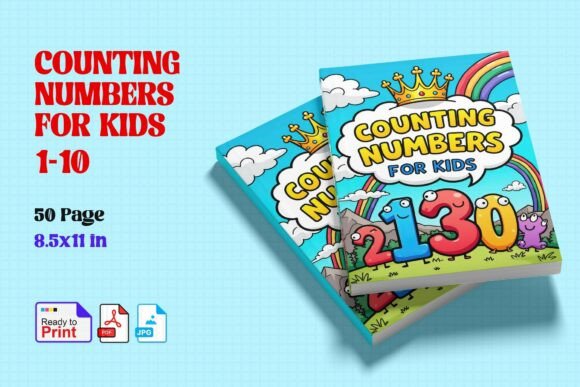
50 Counting Numbers Worksheets for Kids
Helping young children build confidence with numbers doesn’t have to mean flashcards and repetition alone. The 50 Counting Numbers Worksheets for Kids offers a joyful, intentional way to introduce early math—through play, color, and familiar food themes like strawberries, pizza, cupcakes, and fresh fruit. Designed for learners aged 3–6, each worksheet focuses on one number from 1 to 10, repeated across five different food-based activities per number. That’s 50 unique pages—no filler, no repeats—just consistent, scaffolded practice that grows with your child’s understanding.
What Makes These Worksheets Work So Well?
It’s not just about counting objects. These worksheets support multiple foundational skills at once: one-to-one correspondence, numeral recognition, visual discrimination, fine motor development (through tracing or coloring), and even early vocabulary building—think “slice,” “cupcake,” “strawberry,” or “pizza topping.” Each page uses clear, uncluttered layouts with bold numerals and high-contrast food illustrations. The food theme isn’t just decorative—it creates instant familiarity. A child who loves apples or ice cream is more likely to linger on a page, point, count aloud, and make connections between symbols and real-world meaning.
Real-Life Uses Across Different Roles
Whether you’re a parent supporting learning at home, a preschool teacher planning small-group rotations, or a digital creator building educational resources, this set adapts naturally:
- At home: Print one page per day as a calm morning or wind-down activity. Pair it with real snacks—count three strawberries, then match them to the “3” worksheet.
- In the classroom: Use pages in math centers, as fast-finisher tasks, or during transition times. Laminate a few for reusable counting mats with dry-erase markers.
- For homeschoolers: Integrate into weekly themes—“Fruit Week”? Pull out the apple and banana counting sheets. “Baking Day”? Grab the cupcake and cookie pages.
- As a digital product seller: Bundle the included cover design and food-themed borders into a branded printable shop collection. The JPEG files allow easy customization for social media previews or website banners.
Why Food Themes Resonate With Early Learners
Food is universal, sensory, and emotionally positive for most young children. It’s something they see, touch, smell, and often help prepare. When a worksheet shows five slices of pizza instead of five abstract dots, it invites storytelling (“Which slice is yours?”), comparison (“Which has more toppings?”), and even gentle social-emotional practice (“How many do we share?”). This emotional hook helps sustain attention—especially important for children still developing focus stamina. You’ll notice kids returning to favorite pages (the ice cream cone sheet is a frequent hit) without prompting, reinforcing skills through repetition that feels like choice—not chore.
What’s Included—and Why It Matters
The bundle delivers practical value right out of the download:
- 50 unique, non-repeating worksheets—each targeting one number 1–10 with varied food contexts. No two pages look alike, keeping engagement high across weeks of use.
- A bright, welcoming cover page—ideal for organizing physical folders, labeling digital files, or creating cohesive lesson plans.
- High-resolution JPEGs—perfect for importing into learning apps, designing custom slides, or editing for specific classroom needs (e.g., adding Braille labels or simplifying visuals for neurodiverse learners).
- Print-ready PDF—formatted at standard US Letter size (8.5" x 11") with proper margins and crisp text, so nothing gets cut off when printed at home or school.
- Playful food-themed borders—subtle but effective framing that adds visual interest without overwhelming the core task.
Things to Keep in Mind Before You Begin
While these worksheets are designed for ease of use, thoughtful implementation makes all the difference. First, remember that mastery isn’t linear—some children grasp “7” quickly but pause at “4.” Let the pace be guided by observation, not the page count. Second, avoid over-printing. Start with 3–5 pages that match your child’s current comfort level—maybe numbers 1–5—and add more only when those feel familiar. Third, pair worksheets with hands-on experiences: count real grapes while working on the “5 grapes” page, or build towers with blocks matching the number shown. Worksheets reinforce learning—they don’t replace tactile, real-world interaction. Finally, if using digitally, consider screen time balance. These printables shine brightest when used alongside conversation, movement, and everyday counting moments (“How many spoons do we need?”).
Who Benefits Most From This Resource?
This isn’t just for teachers or parents with formal training. It’s equally valuable for grandparents helping with summer learning, babysitters looking for meaningful activities, therapists incorporating math into sensory play, or even older siblings leading “teaching time.” Because the design is intuitive and the instructions implicit (count, trace, circle, color), there’s little setup required—just print, grab crayons or counters, and begin. For educators building inclusive classrooms, the food theme avoids cultural assumptions while offering natural entry points for multilingual learners (“pizza” and “strawberry” are widely recognized terms). And for creators or small business owners, the clean, commercial-use-ready files open doors for bundling, reselling (with appropriate licensing), or integrating into subscription-based learning kits.
The 50 Counting Numbers Worksheets for Kids works because it meets children where they are—with joy, relevance, and quiet consistency. It doesn’t try to be everything at once. Instead, it does one thing exceptionally well: helping little learners form steady, positive first relationships with numbers—using the language of food they already love.