500 Self-Care Journal Prompts: Your Editable, Therapist-Inspired Tool for Mental Wellness and Lasting Growth
Self-care isn’t just bubble baths and scented candles—it’s a daily, intentional practice of honoring your emotional, mental, physical, and spiritual needs. And one of the most research-backed, accessible, and transformative self-care tools available today is journaling. But blank pages can feel intimidating. That’s where 500 Self-Care Journal Prompts comes in: a fully editable, thoughtfully curated collection designed to guide reflection, spark insight, and nurture lasting well-being—no guesswork required.
Why 500 Prompts? Because Depth Matters More Than Quantity
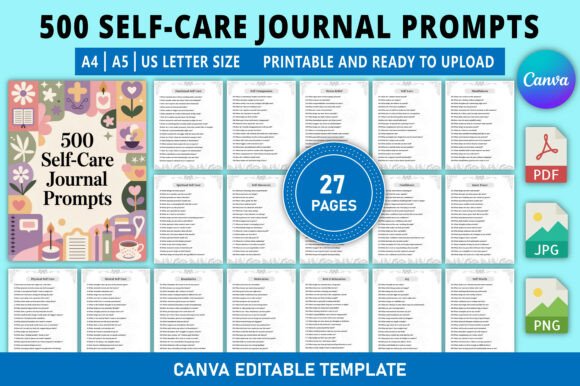
At first glance, “500” may sound overwhelming—but these aren’t repetitive or filler prompts. Each one is purpose-built across 27 distinct wellness categories, from Self-Compassion and Boundaries to Mindfulness, Letting Go, and Self-Worth. This breadth ensures you’ll never hit a wall—even on days when anxiety clouds clarity or exhaustion dulls motivation.
Unlike generic journal templates, this resource reflects evidence-informed practices used by therapists, coaches, and trauma-informed educators. For example:
- A prompt like “What would my most compassionate friend say to me right now?” gently activates self-compassion—a core skill linked to reduced rumination and improved emotional regulation (Neff & Germer, 2013).
- Questions such as “When did I last honor a ‘no’ without guilt? What made it possible?” build boundary awareness—essential for preventing burnout in high-demand roles like healthcare, teaching, or caregiving.
- Guided reflections like “What small sensation brought me peace today—warmth, silence, breath, light?” anchor attention in the present, supporting mindfulness-based stress reduction (MBSR) principles.
This isn’t about perfection or productivity—it’s about presence. And with 500 options, you’ll always have a gentle doorway back to yourself.
More Than Just Words: A Fully Editable, Real-World Design
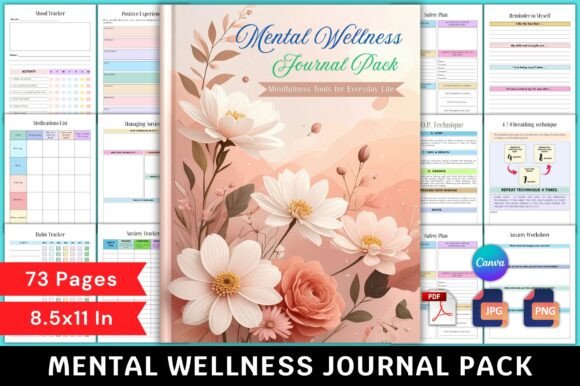
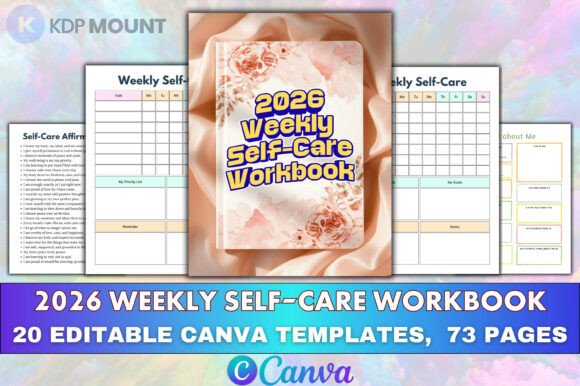
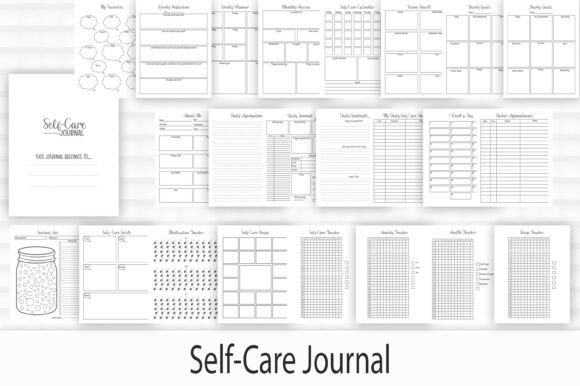
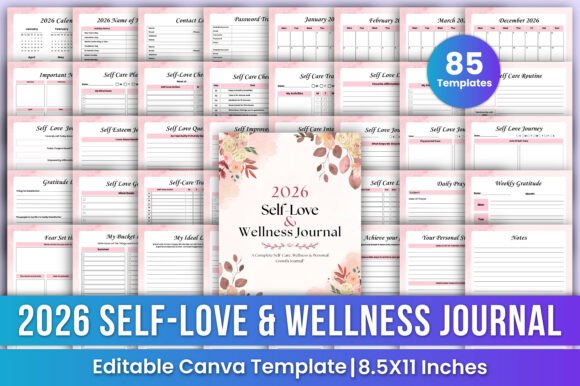
This journal isn’t static. It’s delivered as an editable Canva file—meaning you can personalize fonts, colors, layout, and even reorder sections to match your rhythm. Whether you’re a teen navigating identity shifts, a busy parent seeking micro-moments of calm, or a therapist building client handouts, customization removes friction and increases consistency.
No design skills? No problem. The interior uses a clean, no-bleed format optimized for printing across three standard sizes:
- A4 (8.26″ × 11.69″) — Ideal for UK/EU users and detailed writing
- A5 (5.8″ × 8.3″) — Portable and perfect for on-the-go reflection
- US Letter (8.5″ × 11″) — Compatible with most home printers and KDP publishing
That flexibility supports real-life use—not just aspiration. You can print a single page for morning intention-setting, bind a monthly booklet for deeper work, or adapt prompts into digital notes or habit trackers. It meets you where you are.
Who Benefits—and How It Fits Into Modern Life
Self-care journaling is often mislabeled as “selfish” or “luxury”—but science says otherwise. Chronic stress, digital overload, and blurred work-life boundaries have made intentional inner maintenance not optional, but essential. Here’s how this prompt collection serves diverse audiences:
For Individuals Seeking Emotional Clarity
Feelings like anxiety, overwhelm, or numbness often stem from unprocessed experiences. These prompts offer scaffolding—not answers. Asking “What emotion am I avoiding right now, and what might it be trying to protect me from?” creates space for curiosity over judgment. Over time, that builds emotional literacy—the foundation of resilience.
For Teens and Young Adults
Adolescence is a critical window for identity formation and neural plasticity. Prompts focused on Self-Discovery, Confidence, and Inner Peace help teens separate external expectations from authentic values—reducing social comparison and building grounded self-trust.
For Coaches, Therapists, and Educators
This resource doubles as a clinical tool. Use prompts in session warm-ups, homework assignments, or group facilitation. The Healing, Boundaries, and Stress Relief sections align with CBT, ACT, and somatic approaches—making integration seamless. Plus, editable formatting means you can brand it for your practice or classroom.
For Remote Workers and Creatives
Without office cues or natural transitions, many struggle with energy management and creative blocks. Prompts like “What drains my focus—and what restores my flow?” or “When did I last feel energized by my own ideas?” support sustainable productivity rooted in self-knowledge—not hustle culture.
Dispelling Common Misconceptions
Before diving in, let’s clarify a few myths:
- Myth: “I need to journal every day to benefit.”
Truth: Consistency matters more than frequency. Even 2–3 thoughtful entries per week strengthens neural pathways tied to self-awareness and regulation. - Myth: “Journaling is only for people who ‘have issues.’”
Truth: Like physical exercise, emotional fitness benefits everyone—regardless of current mental health status. Prevention is far more effective (and less costly) than crisis intervention. - Myth: “Editable = low quality.”
Truth: Editability increases accessibility, inclusivity, and long-term usability. You control tone, language, cultural relevance, and accessibility features (e.g., larger fonts, dyslexia-friendly typefaces).
How to Get Started—Without Overwhelm
You don’t need a plan to begin. Try this simple 3-step approach:
- Scan, Don’t Scroll: Flip through the 27 pages. Highlight 3–5 prompts that quietly pull at your attention—even if you’re unsure why.
- Write Without Editing: Set a timer for 5 minutes. Write freely. Spelling, grammar, and logic don’t matter. Let your hand move.
- Notice One Shift: Afterward, pause. Did your shoulders soften? Did a buried feeling surface? Did a new question arise? That’s growth—not grand revelations.
Over time, patterns emerge. You’ll notice which categories resonate most (Spiritual Self-Care? Rest & Relaxation?) and naturally deepen there. That’s how sustainable habits form—not through force, but through resonance.
Final Thought: Self-Care Is a Practice, Not a Product
Yes, this 500-prompt journal is a powerful tool—but its true value lies in how it invites you back to yourself, again and again. In a world that rewards output over inner attunement, choosing to reflect, pause, and witness your experience is quietly revolutionary.
Whether you’re rebuilding after loss, managing chronic stress, nurturing creativity, or simply reclaiming joy in ordinary moments—these prompts meet you with warmth, wisdom, and zero judgment. They won’t fix everything. But they will help you remember: You are worth your own attention. Your feelings are valid data. Your healing is already unfolding—one honest sentence at a time.